
TL;DR
Digital payments are no longer an alternative; they are becoming the default. By 2028, digital payments are expected to represent 79% of e-commerce transactions and 53% of POS payments.
Growth comes with a darker side: merchant fraud losses are projected to rise from $38B in 2023 to $91B by 2028.
Authorization is not settlement. A payment approval does not mean money has moved - understanding this difference explains many operational failures.
Security always has a cost. Every additional protection layer impacts speed, conversion, or complexity.
The next payment battle is not about wallets or cards. It is about owning the infrastructure stack - gateways, acquiring, FX, issuing, compliance, and risk management.
Opening Hook
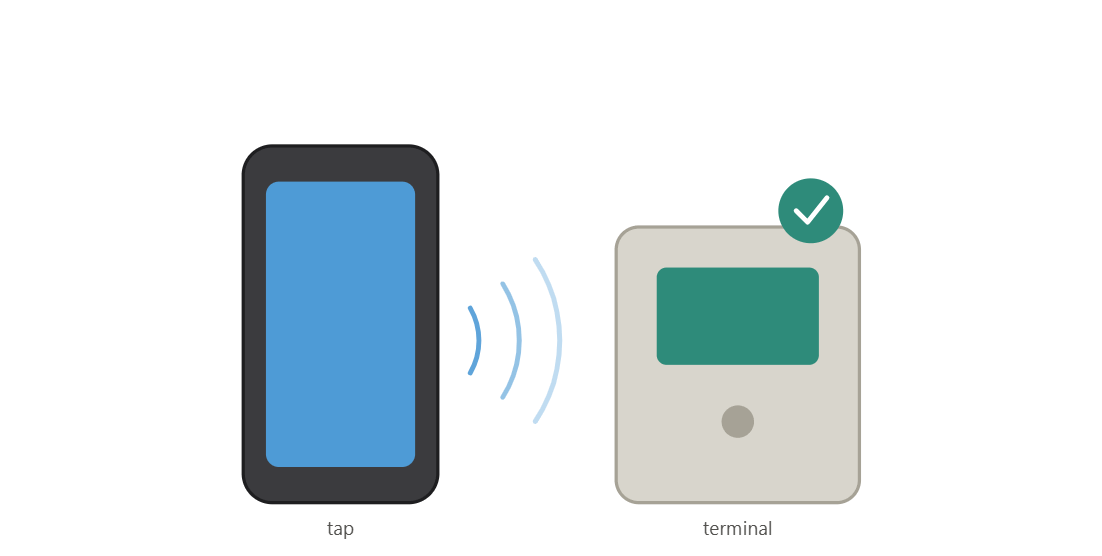
A customer taps her phone at a London supermarket checkout.
Two seconds later, the screen flashes: Payment Successful.
She puts her groceries into a bag and walks away.
But behind that simple tap, hundreds of invisible decisions just happened.
Her device created a secure payment credential. A gateway routed the transaction. Networks exchanged messages. Her bank checked identity, balance, and fraud signals. Multiple systems across different companies agreed that the transaction was safe enough to approve.
And yet, one important thing did not happen.
The money did not actually move.
That approval was only a promise.
Settlement - the actual transfer of funds - happens later.
This gap between what consumers see and what payment infrastructure actually does is the real story of digital payments.
The world sees convenience.
The industry sees a massive engineering challenge: moving money instantly while controlling fraud, risk, cost, and complexity.
Context & Problem
Cash was simple.
Digital money is not.
Modern payments are built from layers of cards, wallets, bank rails, APIs, payment gateways, fraud systems, and compliance networks - all designed to recreate what cash achieved instantly.
The difference?
Digital payments operate at global scale.
By 2028, nearly 8 out of 10 e-commerce transactions and more than half of all POS transactions are expected to happen digitally.
In 2014, digital payments represented only 34% of e-commerce and 3% of POS activity.
This is not a gradual shift.
It is a complete transformation of how money moves.
But the difficult part is not enabling payments.
The difficult part is balancing four competing goals:
Higher approval rates
Lower fraud
Faster settlement
Lower operational cost
Improving one often creates pressure on another.
That tension defines the modern payment industry.
System Breakdown: What Actually Happens When You Pay
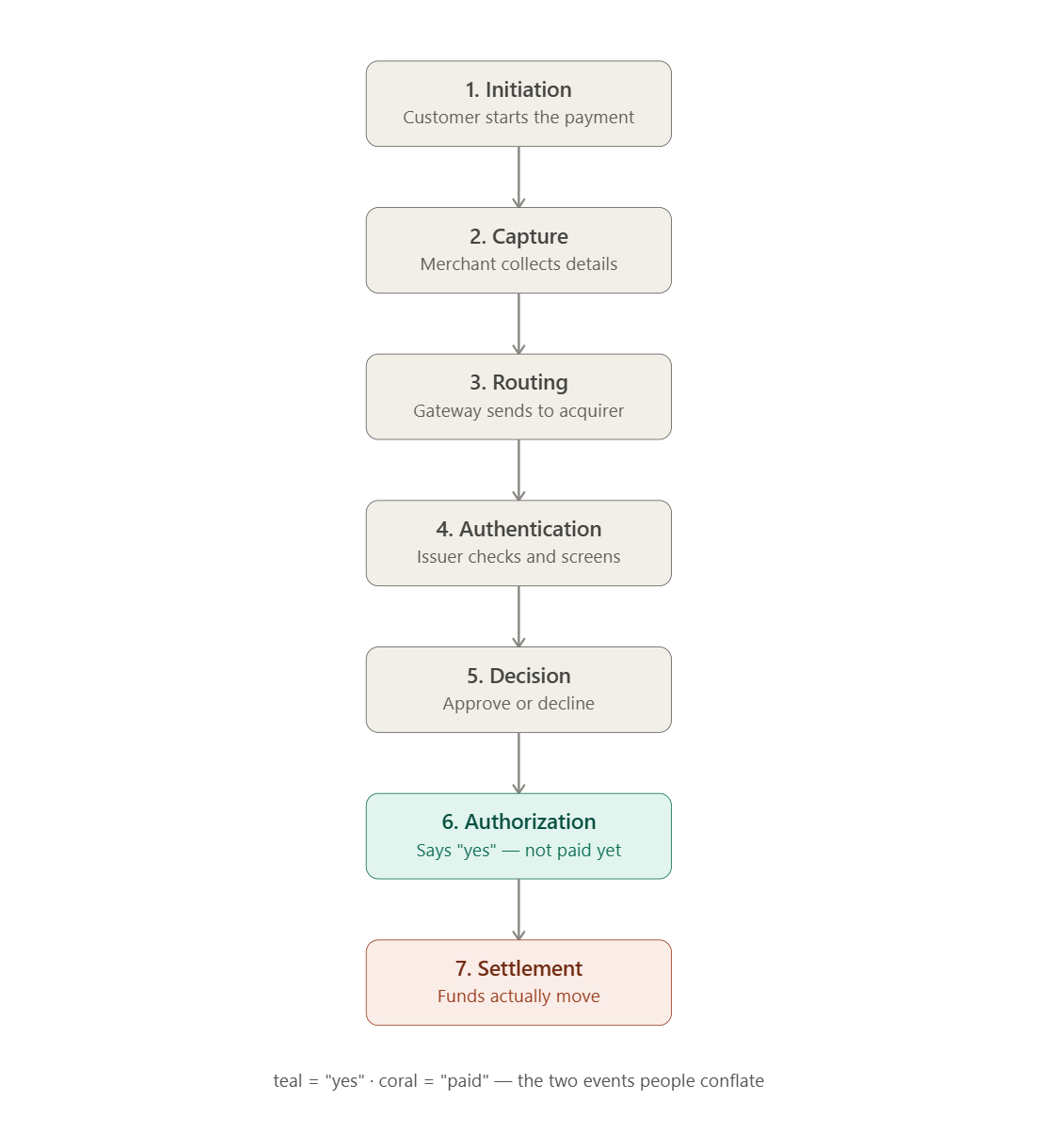
Every digital payment follows a similar path:
1. Initiation
The customer starts the transaction through a card, wallet, QR code, or bank transfer.
2. Capture
The merchant collects payment information and sends the request.
3. Routing
The payment gateway connects the transaction to processors, acquiring banks, and payment networks.
4. Authentication
The issuing bank verifies identity, account status, and fraud signals.
5. Decision
The transaction is approved or declined.
6. Authorization
The merchant receives approval - but funds have not moved yet.
7. Settlement
The actual transfer of money happens between financial institutions.
The most misunderstood concept in payments:
Authorization means “approved.”
Settlement means “paid.”
Confusing these two creates reconciliation problems, delayed payouts, and operational headaches for merchants worldwide.
The Economics Nobody Sees at Checkout
Every payment method is a different compromise between speed, cost, security, and reach.
Cards
Cards remain dominant because they work everywhere.
In the UK:
Debit cards represent around 48% of online payment volume
Credit cards contribute around 26%
But cards bring interchange fees, chargeback exposure, and increasing fraud pressure.
Digital Wallets
Wallets such as Apple Pay, Google Pay, and PayPal reduce checkout friction through tokenization.
Their adoption is accelerating:
3.7 billion users (2023) → 5.4 billion expected users (2028)
However, merchants increasingly depend on platforms they do not fully control.
NFC & Tap-to-Pay
Contactless payments succeeded because they removed unnecessary friction.
A customer simply taps and continues.
The limitation:
They solve physical proximity payments, not every digital commerce problem.
Account-to-Account Payments
A2A payments bypass traditional card networks.
Advantages:
Lower processing costs
Faster transfers
Direct bank connectivity
Challenges:
Less standardized consumer protection
Different fraud models
No payment method wins everywhere.
Each one represents a different point on the same trade-off curve.
Key Metrics at a Glance
MetricDataDigital e-commerce payments34% (2014) → 79% projected (2028)Digital POS payments3% (2014) → 53% projected (2028)Digital wallet users3.7B (2023) → 5.4B (2028)Global non-cash transactions1,650B (2024) → 2,838B (2028)Payment gateway market$32.5B (2023) → $132B projected (2030)Merchant fraud losses$38B (2023) → $91B projected (2028)
The pattern is clear:
More digital payments create more opportunity.
They also create more attack surfaces.
Risks
Operational Risk
Payments depend on thousands of interconnected systems.
A gateway outage, banking failure, or API disruption can instantly interrupt revenue.
Financial Risk
Fraud is no longer an occasional problem.
It is now a business expense.
Chargebacks, account takeover, fake transactions, and refund abuse directly impact margins.
Security Risk
The threat landscape continues expanding:
Phishing
Credential theft
Malware
Fake checkout pages
DDoS attacks
Insider threats
The challenge is protecting transactions without making customers abandon them.
Bull vs Bear Case
Bull Case
Digital payments continue expanding as wallets, instant payment rails, and embedded finance become mainstream.
Integrated payment platforms allow merchants to enter new markets faster while improving fraud detection through better data.
The payment infrastructure market grows because businesses increasingly need complete financial operating systems.
Bear Case
Fraud grows alongside transaction volume.
More security requirements could increase checkout friction, reducing conversion rates.
Regulatory differences between countries may slow global payment consolidation.
Scenario Analysis
Scenario 1 - Frictionless Future
Biometric authentication, tokenization, and AI-driven fraud detection mature enough to reduce risk without slowing payments.
Best outcome for merchants and consumers.
Scenario 2 - Security Arms Race
Fraud increases faster than expected.
Companies respond with stricter verification, creating more friction and lower conversion.
Scenario 3 - Infrastructure Consolidation
Payment providers combine gateways, FX, issuing, compliance, and risk tools into unified platforms.
Merchants get simplicity.
But they become more dependent on fewer providers.
What Most People Miss
Digital payments are often described as a consumer behavior story.
People prefer tapping instead of using cash.
That is true - but it misses the bigger picture.
The real competition is infrastructure.
The winning payment companies are not simply creating faster checkout experiences.
They are solving a complicated optimization problem:
How do you approve more legitimate transactions while stopping fraud, reducing cost, and moving money faster?
Consumers see a two-second payment.
Behind it is a continuous battle between convenience and control.
Key Variables to Watch
Authorization Rates
The percentage of legitimate payments successfully approved.
Fraud-to-Volume Ratio
Whether fraud grows slower or faster than payment volume.
Wallet Adoption
How quickly wallets replace traditional card entry.
Regulatory Alignment
Whether global payment rules become unified or fragmented.
Instant Payment Growth
How quickly real-time bank payments challenge card networks.
Strategic Impact
For Merchants
Payments are no longer a technical backend decision.
They directly influence:
Revenue conversion
Customer experience
Fraud losses
International expansion
The wrong payment strategy can quietly destroy margins.
For Banks & Fintechs
The future belongs to integrated platforms.
Companies increasingly want one partner handling:
Payments
Banking
FX
Compliance
Risk management
Standalone tools are becoming harder to defend.
For Consumers
The best payment experience is invisible.
When payments work perfectly, users never think about the infrastructure behind them.
That invisibility is the result of enormous engineering complexity.
Conclusion
Digital payments are not replacing cash because they are simpler.
They are replacing cash because they solve a much bigger problem:
How do you move money instantly across a connected world while managing trust, fraud, and complexity?
The future of payments will not be decided by who creates the fastest checkout button.
It will be decided by who builds the strongest financial infrastructure underneath it.
The consumer sees a tap.
The industry sees a global machine balancing speed, security, and scale.
And that invisible machine is becoming one of the most important systems in modern commerce.
Personal Note
Payments rarely receive the attention given to flashy fintech trends like crypto, AI, or digital banking.
But payments are the foundation underneath all of them.
Every marketplace, subscription business, bank app, and financial product depends on money moving correctly.
The most interesting part is that when payments work, nobody notices.
And that is exactly the point.
The best infrastructure disappears into the background - until it fails.